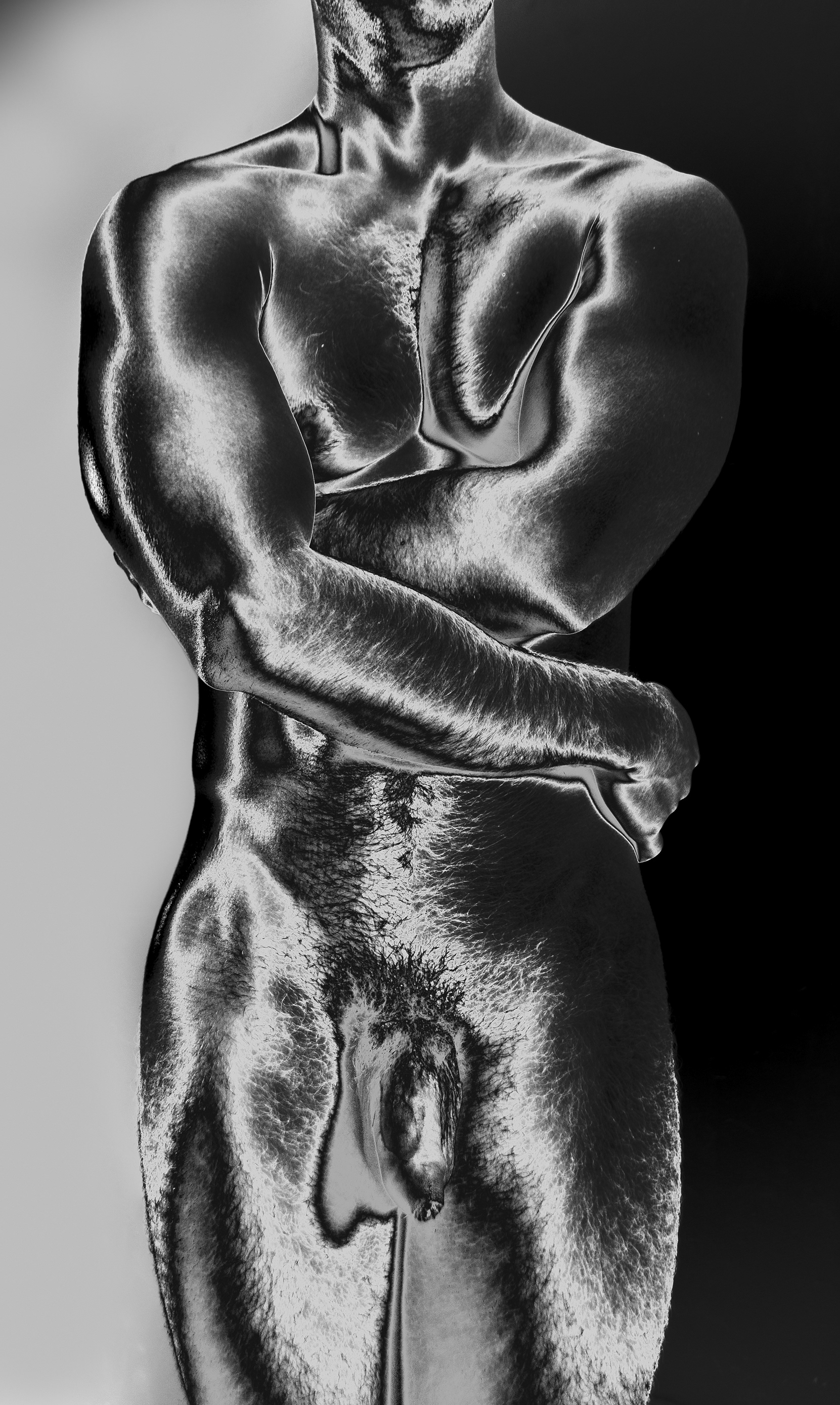
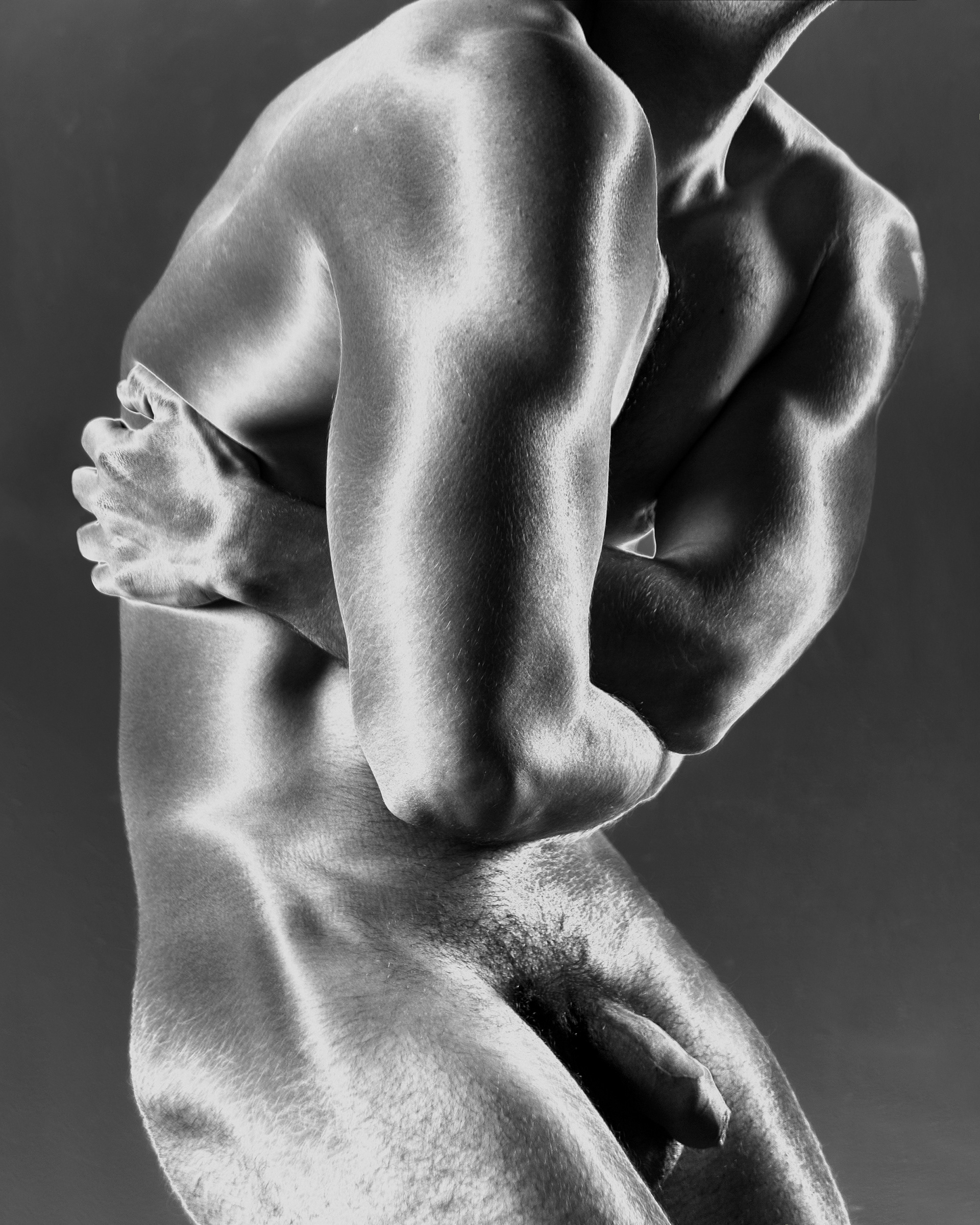
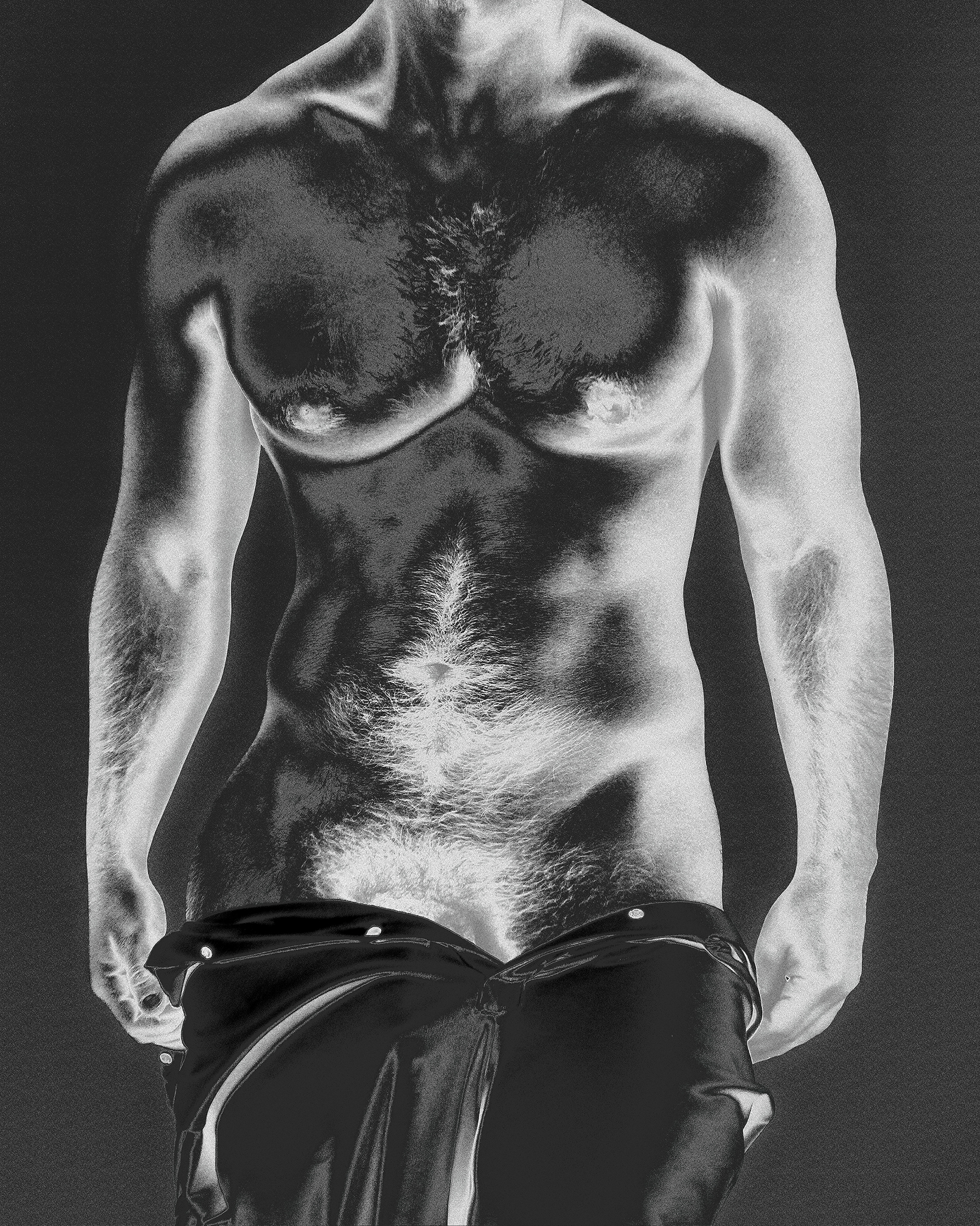
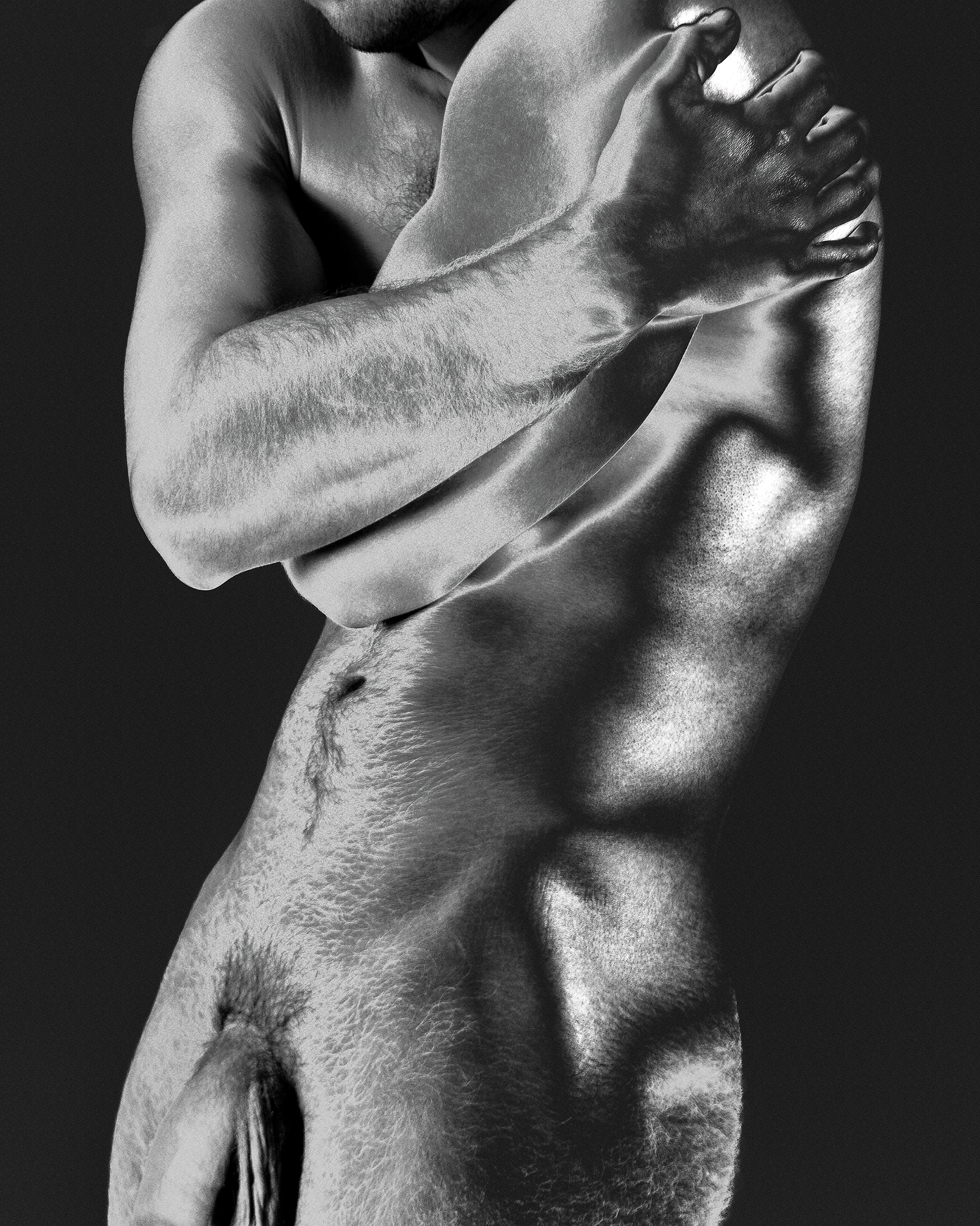
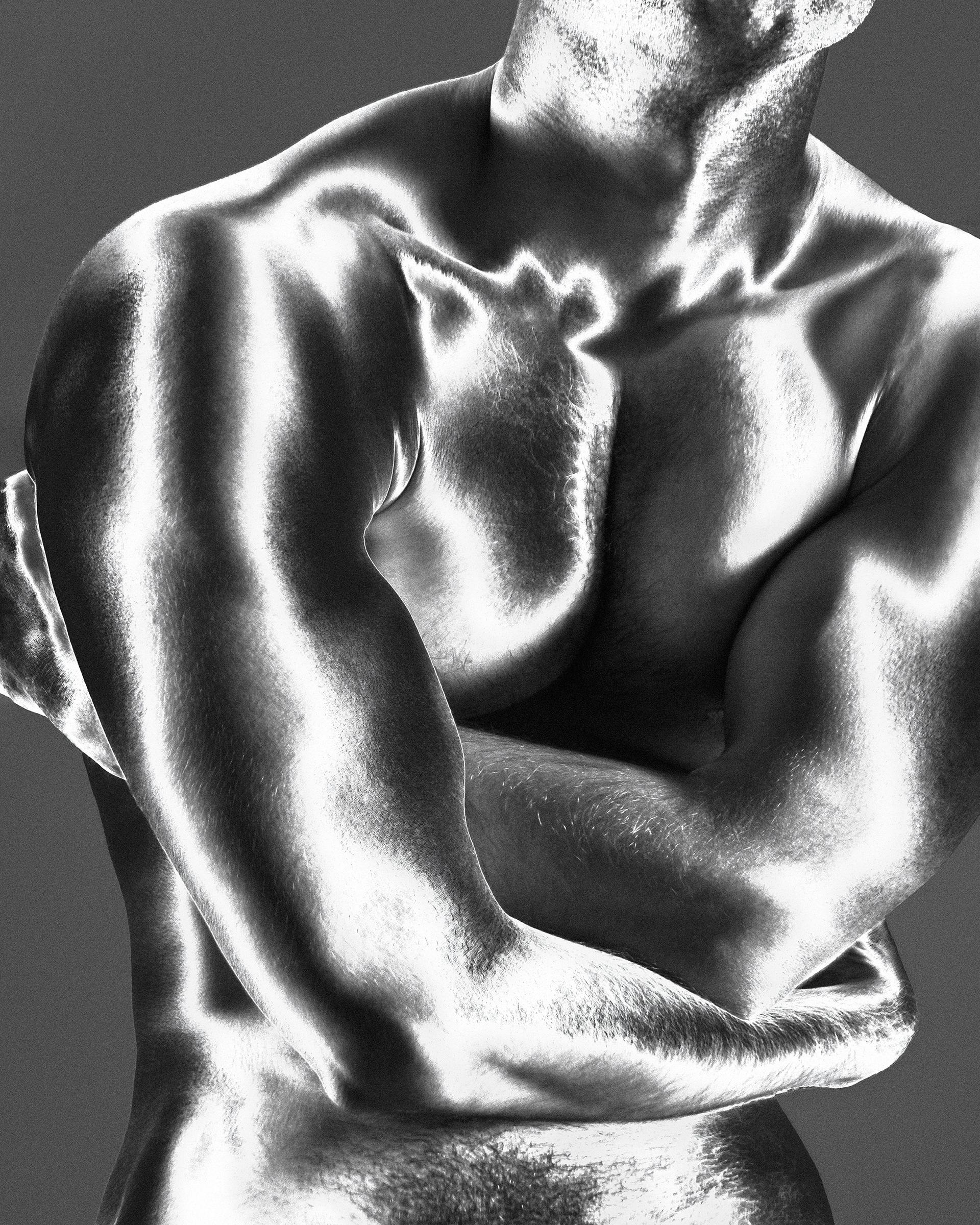
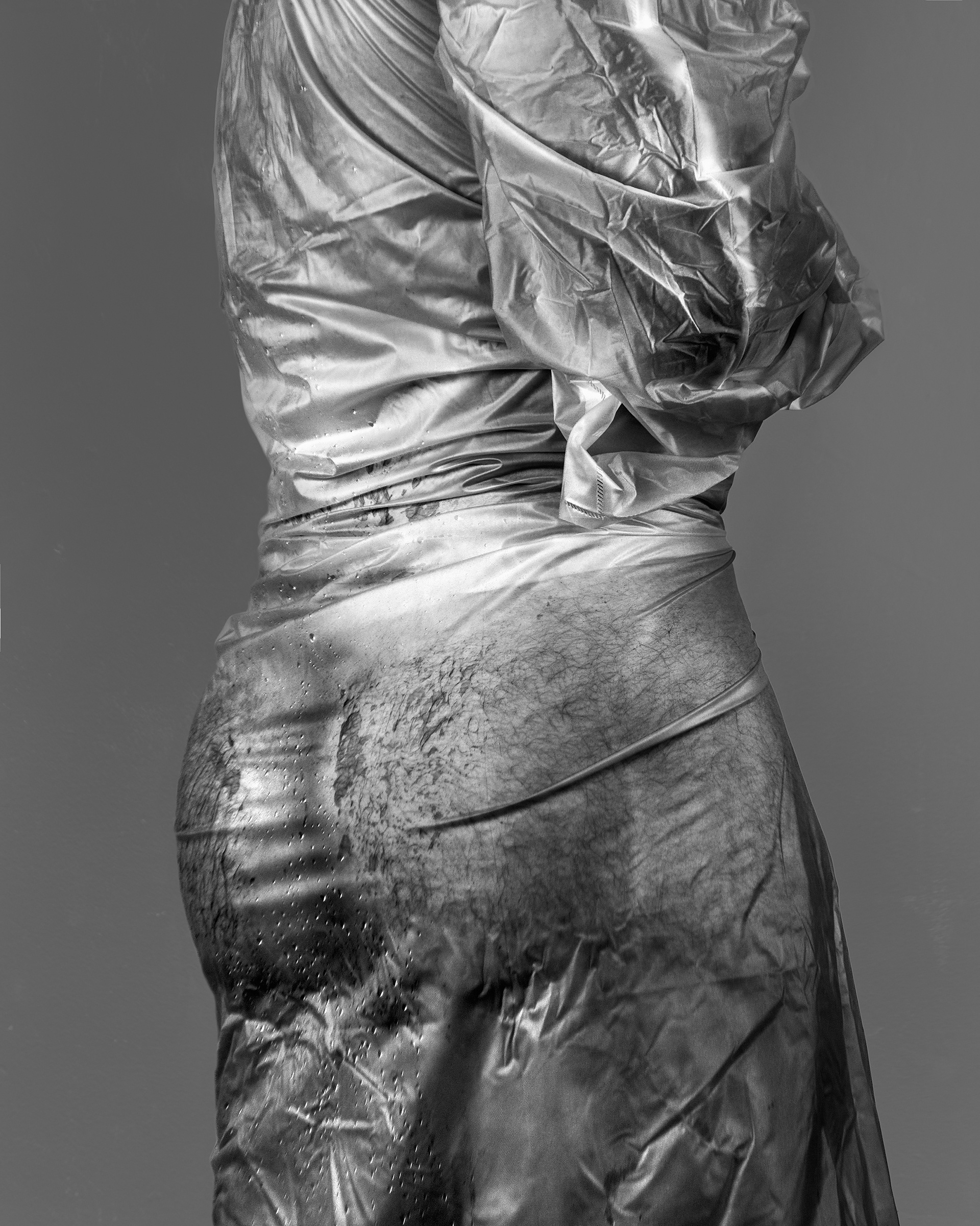
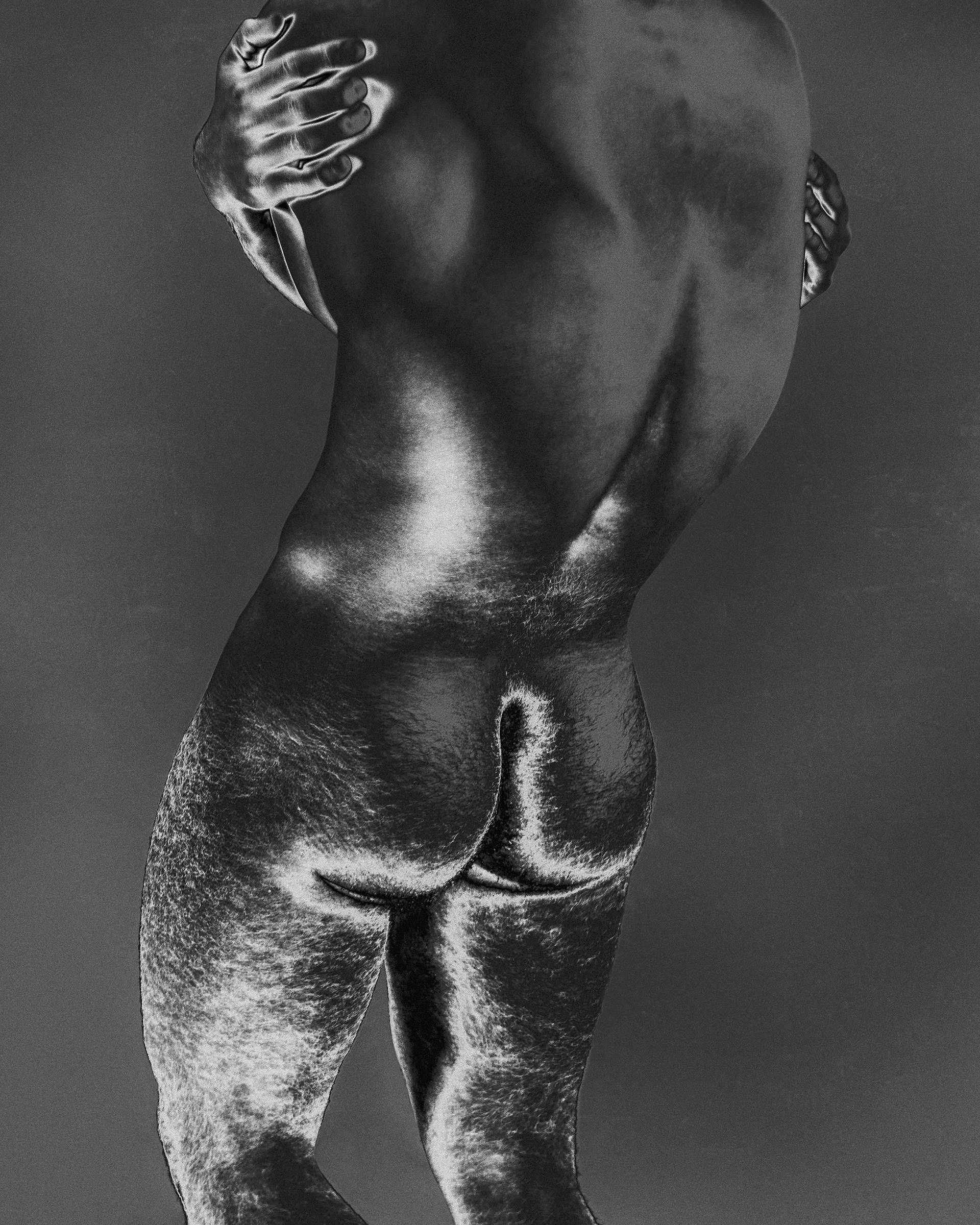
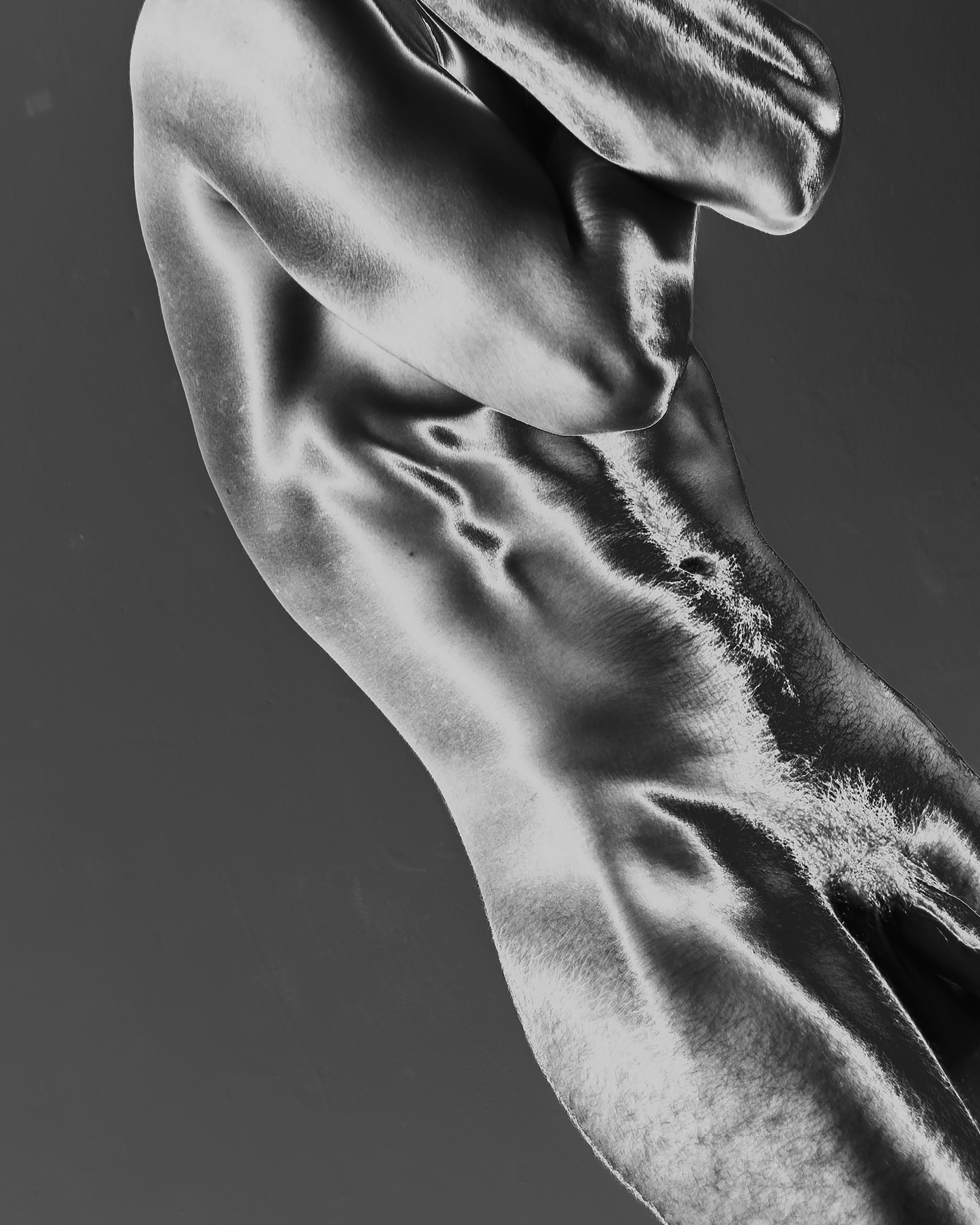
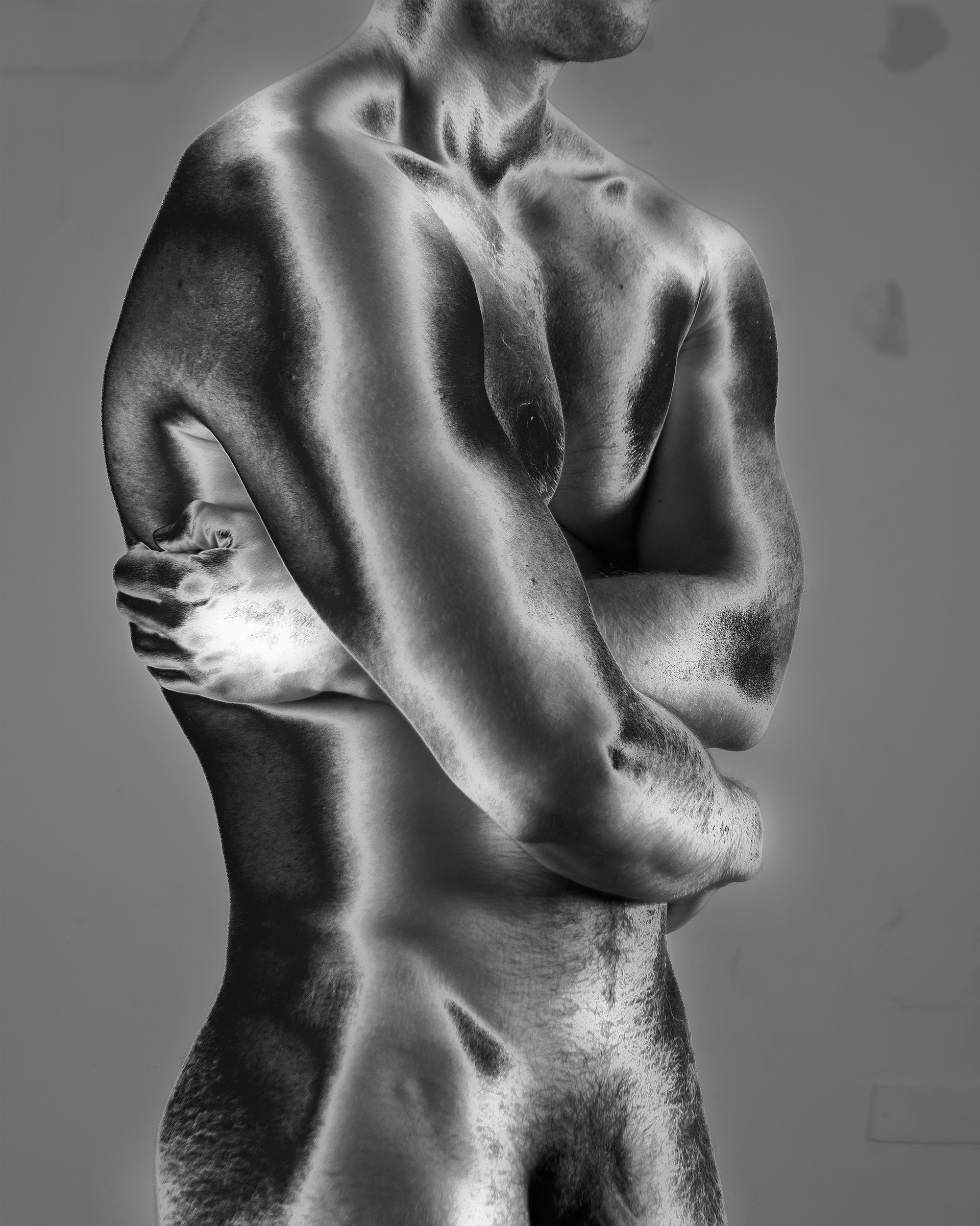
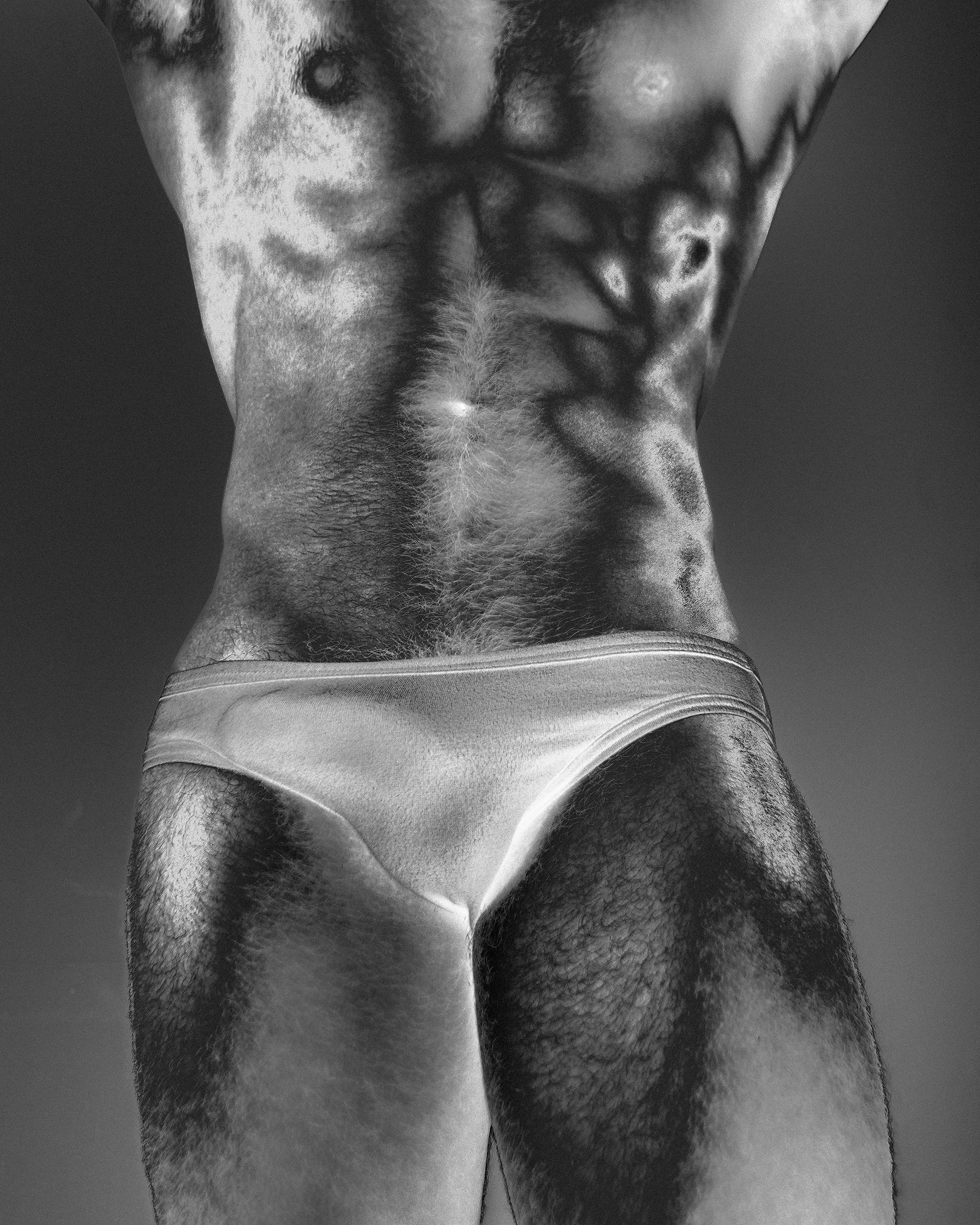
The Myths of Human Erectness explores the human body as both subject and object, interrogating the myths surrounding masculinity, erectness, and human supremacy. The male figure emerges as something between flesh and artifact: inert yet monumental, sculptural yet estranged from its own humanity. It becomes an object of value —cold, metallic, imposing— echoing the aura of a silver statue, simultaneously precious and unsettling.
This transformation questions the inherited narrative of erectness —a symbol of dominance, progress, and ego rooted in the evolutionary leap from quadruped to biped— and the authority that humans have claimed over the world and other species.
By reimagining the body as an object-tool, The Myths of Human Erectness subverts traditional visual codes of virility and power, inviting the viewer to reflect on the fragility of the human versus the object and the machine.
El mito de estar de pie explora el cuerpo como sujeto y objeto, interrogando los mitos que rodean la masculinidad, la erectitud y la supremacía humana. La figura masculina aparece como algo situado entre la carne y el artefacto: inerte pero monumental, escultórica y, al mismo tiempo, extrañada de su propia humanidad. Se convierte en un objeto de valor —frío, metálico, imponente— que evoca la presencia de una estatua de plata, tan preciosa como inquietante.
Esta transformación cuestiona la narrativa heredada de la erectitud —símbolo de dominio, progreso y ego, arraigado en el salto evolutivo de cuadrúpedo a bípedo— y la autoridad que los humanos han reclamado sobre el mundo y las demás especies.
Al reimaginar el cuerpo como objeto-herramienta, Los mitos de la erectitud humana subvierte los códigos visuales tradicionales de la virilidad y el poder, invitando al espectador a reflexionar sobre la fragilidad de lo humano versus el objeto y la máquina.